
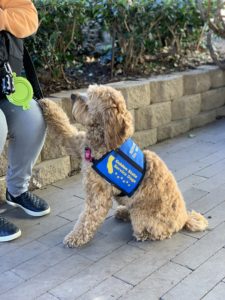
 Golden State Service Dogs Standards for Owner-Trained Service Dogs:
Service dogs are held to exceptionally high standards, and not every dog is an ideal fit for working service. At Golden State Service Dogs, we evaluate each dog’s behavior, temperament, obedience, performance abilities, and overall health, as well as the handler’s responsibilities, expectations, and requirements for qualification. Our mission is to ensure the long-term safety, well-being, and success of every working team.
Our Owner-Trained Service Dog Qualification Standards:
- Obedience and Skilled Task Performance: Dog must obey all obedience and task commands (verbal and hand signals) from the handler at least 90 percent of the time on the first cue while using approved gear only. Dog must be fully potty trained and relieve themselves in appropriate locations on command.
- Spay/Neuter Requirement: Dog must be altered; a spay/neuter certificate is required.
- Behavior and Public Conduct: Dog must be well behaved and under control at all times in public and at home. No aggressive behaviors (biting, snapping, growling, lunging, or aggressive barking), including during positive play.
- Public Manners & AKC CGC Requirement: Dog must pass the Group AKC Canine Good Citizen Test and demonstrate appropriate public access behavior, including not disrupting business flow, blocking aisles, soliciting food, or seeking attention from passersby. No sniffing or mouthing merchandise unless the handler is purchasing it.
- Annual Review Command Evaluation: Dog and handler must complete the GSSD Annual Review, demonstrating a minimum of three skilled task commands directly related to the handler’s diagnosed disability.
- Grooming, Vesting, and Documentation: Dog must be clean, well groomed, and working in an approved GSSD vest while in public. Vest must include required documentation and a full clean-up kit.
- Health Standards & Veterinary Requirements: Dogs must pass an Annual Health Exam with their veterinarian verifying they are healthy enough to perform required tasks.
For Mobility Support Service Dogs: Dog must be size and stability appropriate for tasks, x-rays required at 24 months of age (prior to work), screening for orthopedic and genetic conditions is strongly recommended (OFA, PennHIP, etc.) and handler is responsible for all costs. - Disability Verification & Medical Prescription: Handler must provide disability verification and a physician’s prescription prior or once minimum qualifications have been met. Annual renewal is required.
- Handler’s Documented Training Hours: 120+ hours of public access training, 30+ hours of general obedience, and hours must be logged over a minimum of six months. Dogs must be vested and working for at least one hour for training to count toward required hours. Ongoing monthly maintenance training must be documented after qualification.
- Public Access Knowledge & Handler Conduct: Handler must be able to appropriately respond to public access questions, understand relevant service dog laws, and demonstrate responsibility, self-control, and appropriate participation with their dog.
- Handler Requirements: Handler must be mature (no minimum age) and able to provide for the dog’s emotional, physical, and financial needs. Handlers under 18 must have responsible adult support.
- Annual Review & Qualification Status: Handlers must complete the GSSD Annual Review each year (completed in December) to maintain their dog’s qualified status for the following year. Failure to complete the annual review may result in probation or the need for additional training or testing.
Service Dog Retirement & Career Transition Policy:
Golden State Service Dogs is committed to honoring the health, safety, and well-being of every working service dog throughout their career. As dogs age, their physical abilities, stamina, and emotional resilience naturally change. Thoughtful planning helps ensure a compassionate and smooth transition into retirement or a modified working role.
Most service dogs retire or begin transitioning to retirement between 8–10 years of age, depending on: breed and size, overall health and veterinary recommendations, orthopedic soundness, the physical and emotional demands of their trained tasks, the handler’s reliance on mobility or medical response support.
To uphold industry best practices and protect each dog’s long-term health, GSSD maintains the following Retirement and Career Transition Policy:
1. Annual Health & Function Review: GSSD will discuss future planning with the handler, including establishing a timeline for transition based on veterinary feedback, the dog’s comfort level, and the tasks required.
2. Retirement Recommendation at 8–10 Years: If a dog is between 8–10 years old and shows signs of decreased stamina, slower response times, reduced mobility, or difficulty sustaining long working days, GSSD may recommend: gradual workload reduction, transition to a “limited duties” status, or full retirement with a career change to companion or emotional support role.
Industry Standards: Most national service dog organizations retire working dogs between 8 and 10 years of age. Common practice aligns with guidelines from: Assistance Dogs International (ADI), International Association of Assistance Dog Partners (IAADP), Guide dog programs across the United States, and various Mobility and medical response dog programs. Retirement timing varies based on health, stamina, and task demands, with the dog’s well-being as the top priority.
3. Safety Comes First: If at any time a dog is no longer physically or emotionally able to perform required tasks safely and consistently, GSSD reserves the right to adjust or discontinue the dog’s working qualification.
4. Handler Responsibilities: Handlers are expected to support their dog’s aging process by: following veterinary guidance, reducing physical strain, providing appropriate rest and recovery, preparing for a successor dog if desired.
5. Vest Return Upon Retirement or Career Change: Once a service dog retires or is no longer able to meet service dog work standards, the GSSD vest must be returned. This protects the integrity of legitimate service dog teams and ensures accurate public representation.
Retirement is a normal, healthy, and honorable stage of a working dog’s life. Our policy is designed to celebrate their service while protecting their comfort and quality of life.
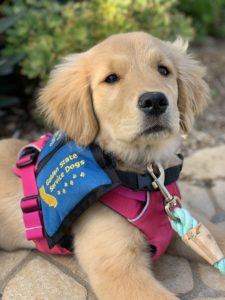
Laws that support service dog handler’s rights: Please see our definitions page here.
Federal law states that purchasing service animal ID items for any animal not specifically trained to perform service tasks, or passing a pet off as a service animal, is a criminal offense. GSSD is committed to upholding service dog standards and screens all clients and dogs diligently to ensure they meet minimum qualifications for owner-trained service dogs.